

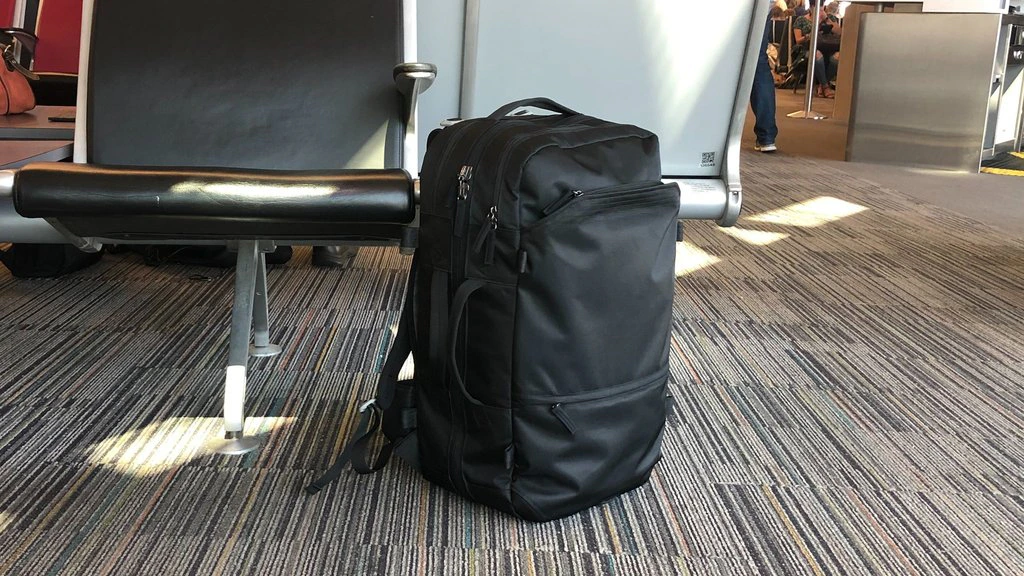
Logical reasoning enables AI agents to represent knowledge about the world and draw conclusions through formal inference. This section covers the foundations of symbolic AI, from propositional logic to knowledge-based agents. We have seen in an earlier chapter where we introduced a dynamical system governing the state evolution of the environment that a state is composed of variables and such factored representations are key in allowing reasoning at the belief space that are efficiently computed using recursive state estimators. We called this subsystem probabilistic reasoning subsystem and we positioned it immediately after the reflexive perception for a good reason. It is processing a very high ‘bandwidth’ state information that is noisy and needs to be filtered by - you guessed it - Bayesian filters to make it very useful for the subsequent upstream services of the AI system. In this chapter we will see another powerful representation, internal to the agent, that can help agents to reason by expressing assertions about the world. These assertions are called sentences and are expressed in a knowledge representation language that is used to build a Knowledge Base (KB) - a concept central to AI. The KB starts with prior knowledge about the domain and problem at hand and incrementally is updated with the output of the probabilistic reasoning subsystem. Lets see a concrete example as described in the figure below, Security robot scenario — identifying an abandoned backpack at an airport Imagine that the agent is a security robot at an airport and is moving around that environment. The problem it tries to solve is to identify an abandoned backpack / luggage. Despite the simplicity of the problem statement this is a very challenging problem to solve. To begin with the robot must be creating static maps of the environment to be able to navigate it. Closer to the core task, we will need to preprogram the agent with all sorts of deep learning models to be able to even recognize backpacks or other luggage items via its perception system. The agent must be able to distinguish a situation where the backpack that was left behind by its carrier (a person) to a companion traveler (another person) to e.g. visit the restroom from the situation where the backpack was left behind maliciously. Unique object IDs must be assigned (symbolic segmentation) to persons and a very accurate scene graph must also be generated by its probabilistic reasoning system. It does not stop there as relational information must be generated to associate objects (e.g. carriers and pieces of luggage) and such information must be stored in the KB but perhaps more importantly the agent must be able to reason using the stored information in the KB.

Topics

Propositional Logic

World models and propositional logic fundamentals.

Logical Inference

Model checking and inference techniques.

Logical Agents

Building agents that reason with propositional logic.

Applications

Real-world applications of automated reasoning.

Learning Objectives

After completing this section, you will be able to:
  1. Represent knowledge using propositional logic syntax and semantics
  2. Apply model checking algorithms for logical inference
  3. Build knowledge bases that support automated reasoning
  4. Design logical agents that can plan and act in known environments