

Neuron
Simple DNN 1
Simple DNN 2
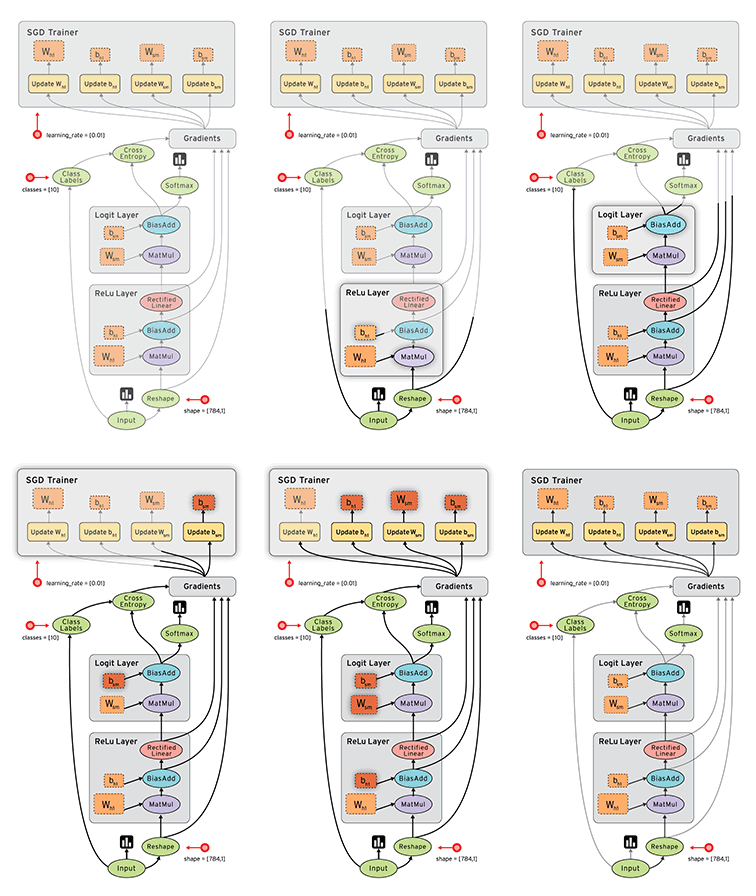
A network consist of a concatenation of the following layers- Fully Connected layer with input , and output .
- RELU producing
- Fully Connected layer with parameters producing
- SOFTMAX producing
- Cross-Entropy (CE) loss producing
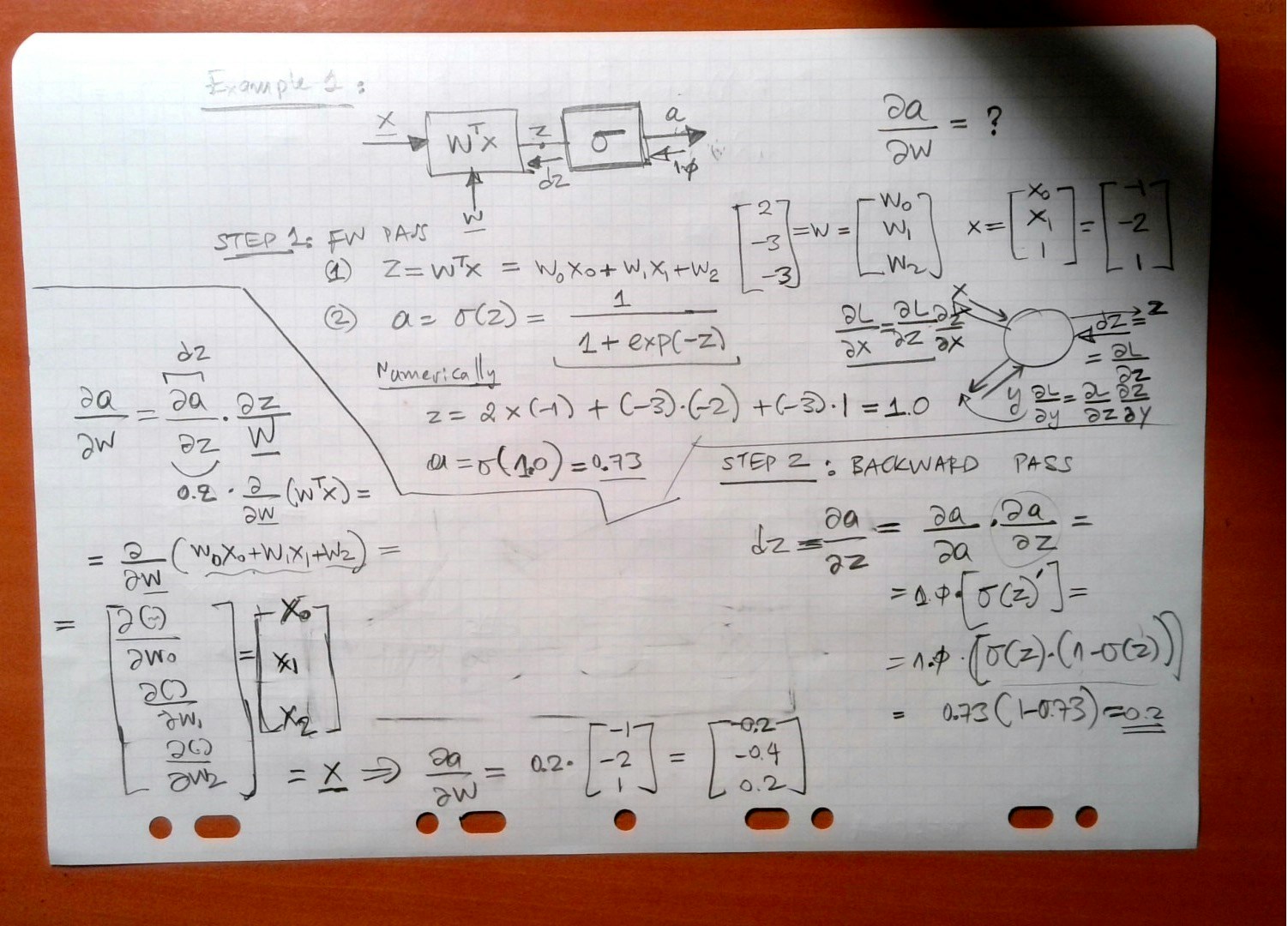
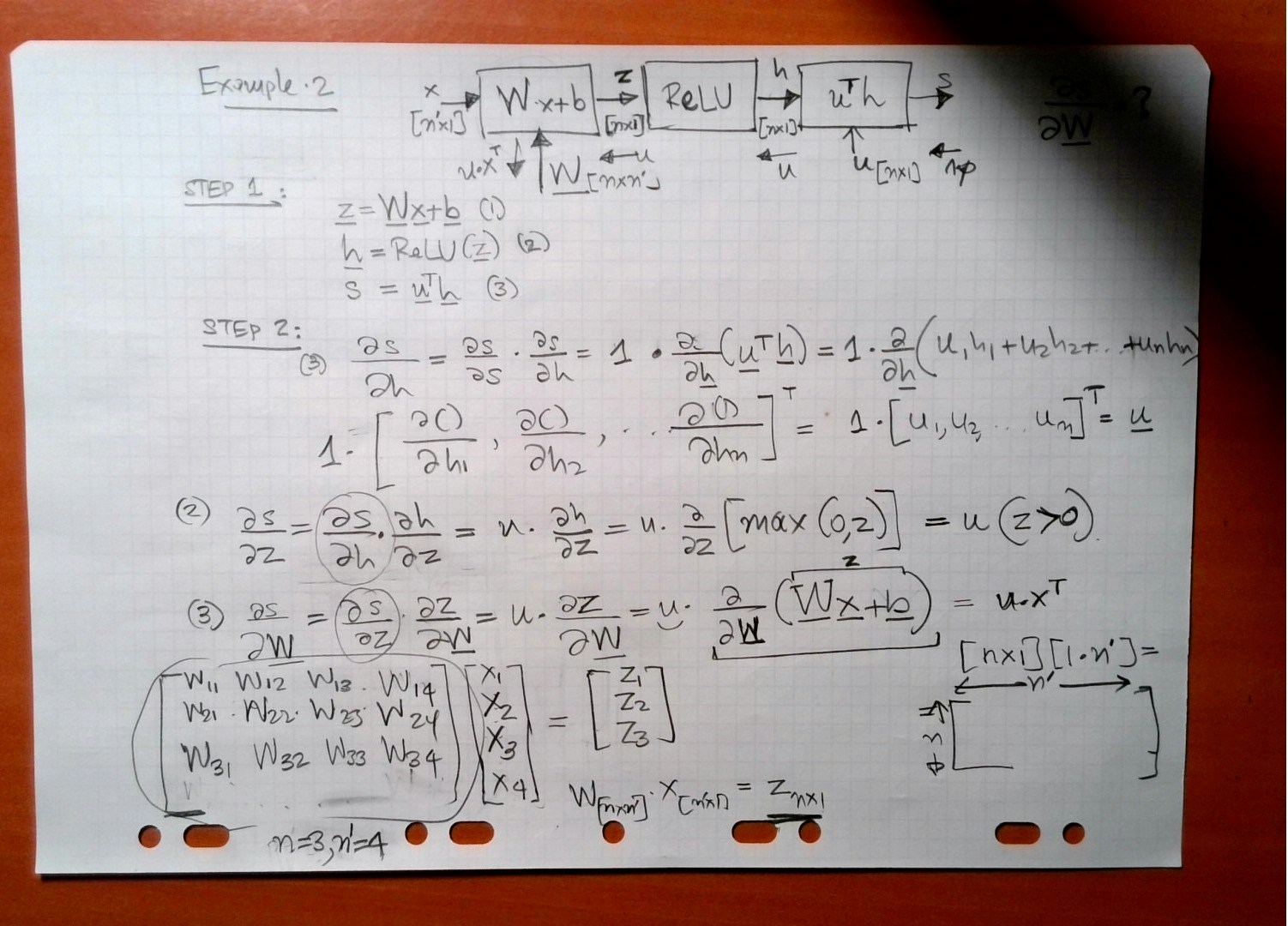
- Sketch the network and write down the equations for the forward path.
- Propagate the backwards path i.e. make sure you write down the expressions of the gradient of the loss with respect to all the network parameters.
Key references: (Choromanska et al., 2014; Romero et al., 2014; Bengio, 2012; Jaderberg et al., 2016; Bengio et al., 2015)
References
- Bengio, Y. (2012). Practical recommendations for gradient-based training of deep architectures. arXiv [cs.LG].
- Bengio, E., Bacon, P., Pineau, J., Precup, D. (2015). Conditional Computation in Neural Networks for faster models. arXiv [cs.LG].
- Choromanska, A., Henaff, M., Mathieu, M., Ben Arous, G., LeCun, Y. (2014). The Loss Surfaces of Multilayer Networks. arXiv [cs.LG].
- Jaderberg, M., Czarnecki, W., Osindero, S., Vinyals, O., Graves, A., et al. (2016). Decoupled Neural Interfaces using Synthetic Gradients. arXiv [cs.LG].
- Romero, A., Ballas, N., Kahou, S., Chassang, A., Gatta, C., et al. (2014). FitNets: Hints for Thin Deep Nets. arXiv [cs.LG].
Found an error on this page? Report an issue.