
Introduction
We include below samples from the well known CIFAR-10 dataset with similar number of classes ().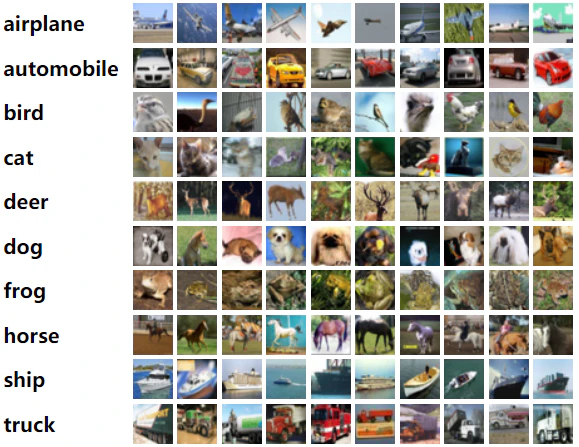
- Seamagine contains gray images with size as compared to CIFAR-10 naturally colored images that have size .
-
Seamagine is an anomaly detection dataset where the vast majority of the images belong to the
PASSclass as compared to CIFAR-10’s unique classes.
Implications
The differences have several implications:- The Seamagine image size constraints the batch size since we cannot fit many images into a single GPU VRAM and multiple GPUs must be used to match the batch size we can configure with CIFAR-10.
- The learning rate is also affected by (1).
- In general, the operating configuration of the same model as determined by Hyperparameter Optimization (HPO) algorithms is different between the two datasets.
Key Insight
Despite the above differences and implications the main value we add by doing this exercise is to highlight the substantial difference on model performance not from the technical perspective but from the semantic perspective.Found an error on this page? Report an issue.