

Introduction
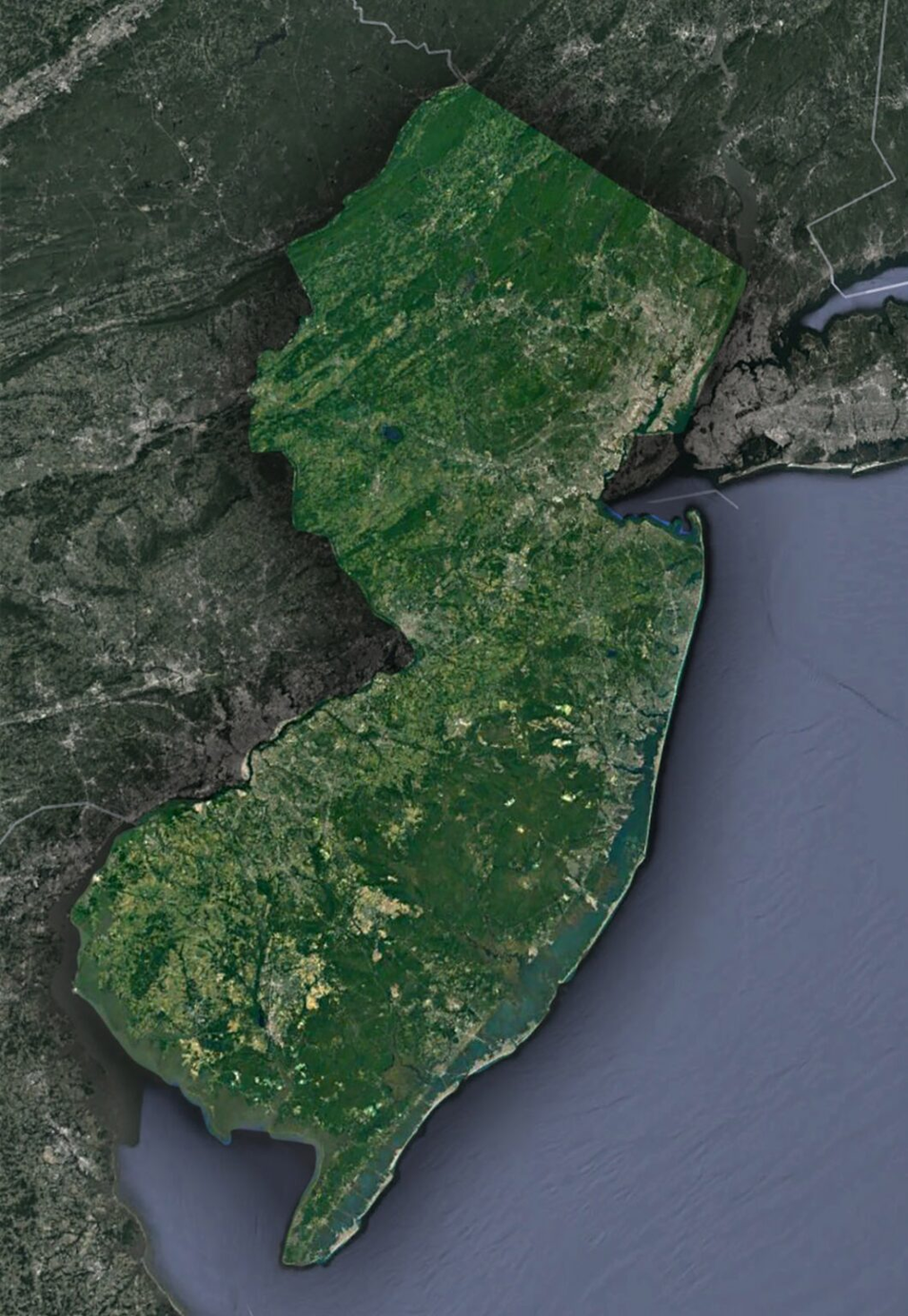
This chapter presents the results of a statewide inference run for extracting sidewalk centerlines across New Jersey. The input data consists of statewide high-resolution aerial imagery available as GeoTIFF tiles, which were preprocessed into model-ready chips through a tiling and normalization pipeline. The run was conducted as the first large-scale test deployment of our geospatial ML pipeline. The primary objectives were:- Output Fidelity: Generate statewide sidewalk detections and assess their quality
- Scalability Check: Validate that our Ray + Triton inference pipeline can handle thousands of tiles
- Performance Baseline: Measure throughput, bottlenecks, and failure points
Hardware Setup
- Single GPU (GPU 0)
- NVIDIA A4000 GPU
Data & Preprocessing
The input consisted of statewide high-resolution aerial imagery of New Jersey, provided as GeoTIFF tiles.Preprocessing Pipeline
- Pseudo-color Conversion: To match the model’s training format (NIR-G-B)
- Normalization: Tile pixel values normalized from UINT16 to UINT8
- Dynamic Padding: Tile pixel dimensions padded to support overlap between chips
- Chipping: Large GeoTIFFs divided into fixed-size chips (256×256)
Pipeline Stages
- Loader, Reading tiles from storage, applying padding, generating chips
- Inference, Queueing, batching, model execution, mask thresholding, reconstruction
- Postprocess, Polygonization, filtering, and centerline extraction
Results
Tile and Job Statistics
Overall Run Performance
Stage Timings (seconds)
Stage Share of End-to-End Time
Median (p50):- Loader: ~9.8%
- Inference: ~83.2%
- Postprocess: ~5.5%
Centerline Quality
Compared with OpenStreetMap (OSM) sidewalk centerline annotations: Strengths:- Alignment with visible sidewalks
- High-value annotations where predictions are strong
- Conservative modeling choice (erring on underprediction)
- Underprediction & occlusion gaps
- Some false positives in highways, driveways, parking lots
- Continuity issues in fragmented segments
Key Takeaways
- Scalability validated: 9,202 statewide tiles processed in 17.2 hours
- High reliability: 99.66% success rate
- Inference-bound performance: ~80–83% of per-tile time
- Annotation quality: Predictions aligned well with visible sidewalks
Potential Optimizations
- Pipeline Throughput, Target 30-50% improvement to achieve ~9-12 hour overnight runs
- Larger / Better Training Dataset, Including DVRPC and Boston imagery
- Centerline Extraction, Dynamic parameterization and occlusion handling
- Dynamic Tile Treatment, Lightweight classifier for routing tiles to specialized processing
Chapter Summary
This statewide case study demonstrates both the scalability of our pipeline and the quality trade-offs of automated sidewalk extraction. The pipeline successfully processed over 9,200 tiles and nearly 5 million chips, validating statewide scale operation. Performance analysis shows that inference is the dominant bottleneck, consuming ~80% of per-tile runtime. The results provide a robust baseline for benchmarking future improvements in throughput and efficiency.Found an error on this page? Report an issue.